
Announcement of International Symposium “Multiple and cascading hazards at snow-covered active volcanoes: Hazards, risk assessments and future mitigation” (English page)
イベント
At the 1985 eruption of Nevado del Ruiz in Colombia, a snowmelt lahar (volcanic mudflow) caused >23000 casualties. Similar disasters could occur at seasonally snow-covered, active volcanoes in Niigata Prefecture (Mts. Niigata-Yakeyama and Myoko).
This symposium invites speakers around the world and in Japan to discuss the multiple and cascading hazards triggered by snow- and ice-melt, and rain during eruptions at snow-covered and glacial volcanoes in countries such as Japan, Chile, Iceland, and New Zealand. The symposium features and discusses hazard processes, risk assessment, and future mitigation strategies for regions with snow-clad active volcanoes.
This is a public symposium open to natural hazard experts, students, local residents, and the general public.
|
Organizer |
Research Institute for Natural Hazards and Disaster Recovery, Niigata University |
|---|---|
|
Supporters |
The Volcanological Society of Japan, The Japanese Society of Snow and Ice, The Geological Society of Japan, Japan Association for Quaternary Research, The Sedimentological Society of Japan |
|
Date and Time |
12 July 2026 (Sunday), 9:20 AM – 4:00 PM |
|
Venue |
Art Hotel Niigata, 4th Floor, Conference room “Yuzawa” (directly connected to Niigata Station) |
|
Admission |
Free |
|
Language |
English language is used during the symposium. However, Japanese may be used for supplementary purposes. |
|
Registration |
Registration form: Registration for participation |
|
<Program> Convener: Atsushi Urabe, Katsuhisa Kawashima 9:00〜 Registration Morning session (9:20〜11:50) 9:20 Opening address Toshiyuki SOMEYA (President of Niigata University) [Theme 1: Volcano, flood, and slope disasters in southern Chile] Chair: Kyoko Kataoka Break (10:50〜11:00) [Theme 2: Disaster and mitigation of snowmelt-induced volcanic mudflows] Chair: Ryoko Nishii Lunch & Poster session (11:50〜13:10) Afternoon session (13:10〜15:40) [Theme 3: Interaction between glaciers and volcanism] Chair: Takane Matsumoto Break (14:15〜14:25) [Theme 4: Snow and ice research for volcanic mudflows] Chair: Naoki Watanabe 15:20〜 Discussion 15:40 Closing remarks Osamu ONODERA (Executive Vice President for Research and Innovation of Niigata University) <Poster presentation> P1 P2 P3 P4 P5 |
|
※Please download the flyer of this international symposium: PDF in Japanese.
Biography of the invited speaker
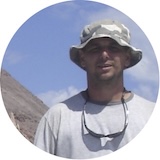
Martín Umazano
Martín Umazano is a Professor at the National University of La Pampa (Argentina), where he teaches Sedimentology and Field Geology. He is also an Independent Researcher at the Institute of Earth and Environmental Sciences of La Pampa, a joint institution of National Council for Scientific and Technical Research (CONICET) and the aforementioned university. For over 20 years, Martín has focused on understanding the sedimentation of volcaniclastic-rich fluvial-alluvial successions across different regions of southern South America. His research includes the study of Cretaceous rocks in Argentine extra-Andean Patagonia, as well as modern fluvial environments and Quaternary deposits affected by active explosive volcanoes in southern Chile. Ultimately, his work seeks to understand the holistic functioning of depositional systems.
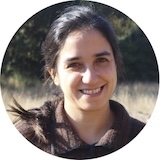
Violchen Sepúlveda
Violchen Sepúlveda is a geologist who graduated from the University of Chile and currently works at the Technical Assistance and Geological Emergencies Unit of the Chilean Geological Survey (SERNAGEOMIN), Los Lagos Regional Office, Chile. Her work focuses on geological hazards in southern Chile, including landslides in volcanic, mountainous, coastal, and urbanized environments. Her professional practice combines hazard assessment, geological emergency response, territorial risk management, and the development of hazard scenarios for geological hazard drills and meteorological events, supporting civil protection actions. She also promotes geoscience communication through museum-based outreach initiatives focused on geological processes and natural hazards.

Andy Russell
Professor Andy Russell is Emeritus Professor of Physical Geography at Newcastle University, UK. He has investigated the impacts of floods and mass flows in Greenland, Iceland, Chile, Norway, Alaska and the UK. He has 40 years experience of research on glacier outburst floods (jökulhlaups) and lahars in glacial and volcanic environments. He has characterised the immediate geomorphological and sedimentary signatures of contemporary high magnitude Icelandic jökulhlaups such as the 1996 Gjálp eruption under Vatnajökull ice-cap, the 1999 jökulhlaup from Mýrdalsjökull and the 2010 Eyjafjallajökull subglacial eruption. He has also characterised the impacts of enormous prehistoric jökulhlaups generated by eruptions under the Vatnajökull and Mýrdalsjökull ice-caps. More recently he has examined the immediate impacts of lahars from Calbuco volcano in Chile.
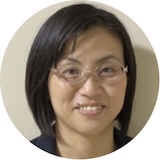
Kae Tsunematsu
Born in Yokohama, Kanagawa Prefecture, Japan, Prof. Kae Tsunematsu did her undergraduate studies at Chiba University and obtained master’s degree from the University of Tokyo. After working as a system engineer for an IT company she started her PhD at the University of Geneva in Switzerland. Her academic career began at the University of Hawaii, USA and Nagoya University, Japan as postdoctoral fellow and worked for the Mount Fuji Research Institute at Yamanashi Prefecture, Japan. She became an Associate Professor at Yamagata University in 2018 and a full Professor in 2026. Since her university days, she was interested in hazard assessment of volcanic eruptions. She works for developing numerical models of eruptive phenomena based on physical mechanisms which are essential for preparing hazard maps and mitigation measures for volcanic eruptions.

Christopher Conway
Christopher Conway is a volcanologist working as a Senior Researcher at the Geological Survey of Japan, AIST, in Tsukuba. He completed my PhD at Victoria University of Wellington in his home country New Zealand, where he studied the glaciovolcanic evolution of Mount Ruapehu. Since moving to Japan in 2016, Chris has used petrological, geochemical, and geochronological analyses to investigate the processes and time scales of magma generation and eruption at active volcanoes. Within that scope, two main motivations of his research are to understand (1) how eruption dynamics are impacted by ice, snow, and water, and (2) whether future deglaciation will affect the behavior of magma systems at arc stratovolcanoes.
《 Contact information 》
Organizer:
Research Institute for Natural Hazards and Disaster Recovery, Niigata University